
The update contained activity. It did not answer the question.
Construction client progress reports should explain verified progress, what happens next and which decisions or unresolved conditions could affect the plan. They are a reviewed communication for the customer, not a copy of the field team's internal record.
Start with the questions the client needs answered
Decide what the update is supposed to help the client understand. Usually that includes what changed since the last report, what the team currently expects next and whether the client needs to make a decision.
Keep the reporting period visible. A photo from last week can be useful historical evidence, but it should not imply that it shows the current state.
Explain the basis for an important forecast. "Planned for Thursday, subject to the outstanding delivery confirmation" tells the client more than a confident date that the team cannot support.
The objective is not to make uncertainty disappear from the message. It is to communicate uncertainty clearly enough that nobody mistakes a working plan for an unconditional promise.
Build from a maintained internal record
Use the current project information rather than asking every person to rewrite their recollection for the client email.
The construction daily-reporting process supplies observations and field context. The schedule supplies the reviewed sequence. Decision and change records explain what has been authorized and what remains unresolved.
The client report combines the relevant parts of those sources. It should not become a new system of record with different dates and statuses.
Assign one person to prepare the update and another review step where the subject requires it. A small contractor may combine these roles, but the responsibility for the final communication should still be explicit.
Use a consistent structure without writing a script
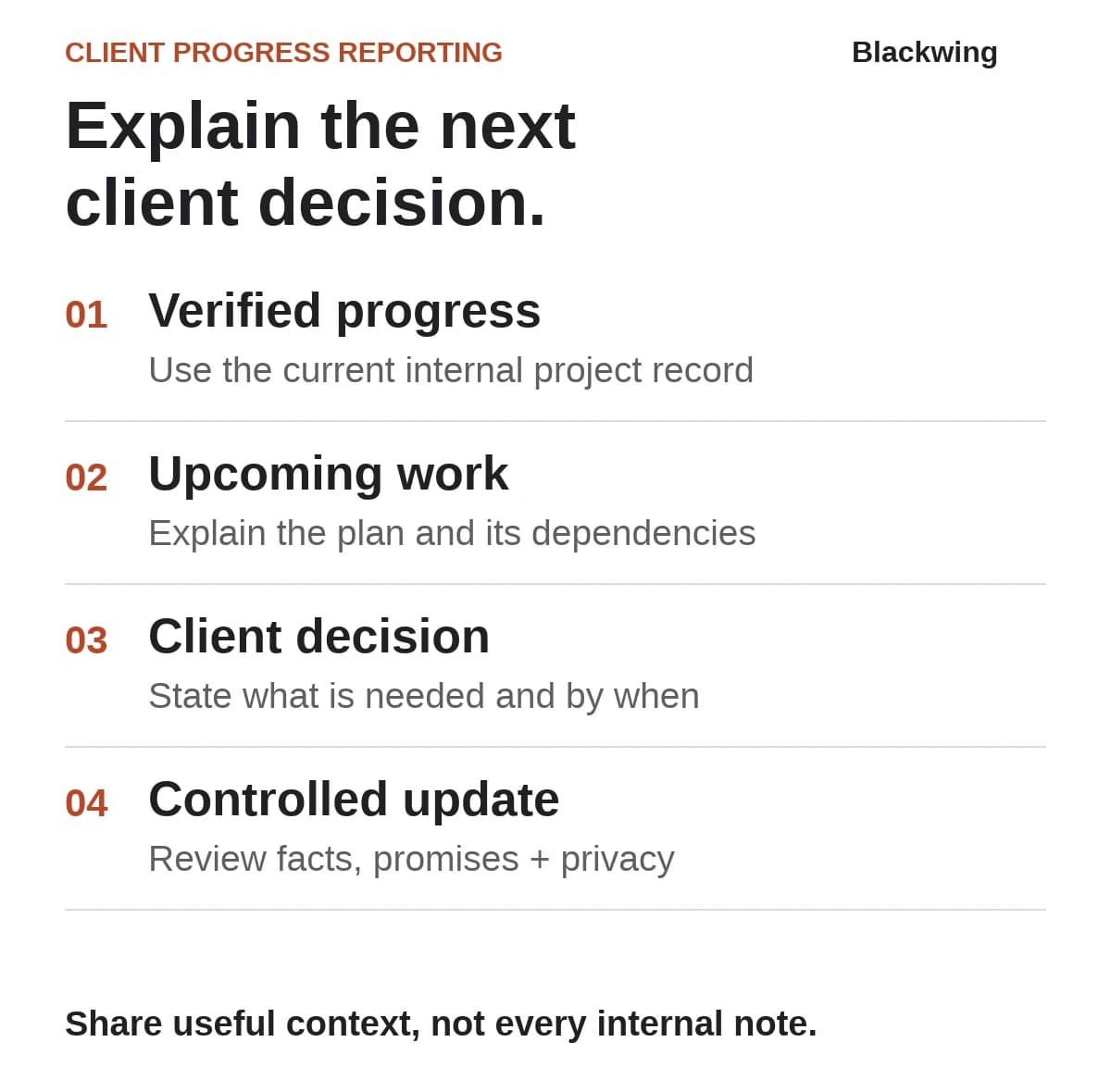
A useful update can cover four short sections:
- Verified progress during the reporting period.
- Upcoming work and its important dependencies.
- Decisions or information needed from the client.
- Open issues, their owners and the next update point.
Keep the wording specific to the job. A template should provide structure, not fill the report with reassuring phrases.
Select photographs that explain the actual progress being described. Add context where an image is difficult for a non-technical reader to interpret. Avoid implying that a photograph establishes quality, acceptance or compliance beyond the relevant qualified review.
If there is no meaningful change, say that and explain the current dependency. Repeating last week's optimistic paragraph is not a progress update.
Turn a requested choice into a clear decision
"Please choose the finish soon" leaves the client guessing about what is needed and why.
Identify the specific choice, available reviewed information, decision owner and date needed to protect the current plan. State how a late response will be evaluated, without inventing a penalty or threatening an unsupported schedule consequence.
The client-selections workflow should hold the decision itself. The progress report makes the request understandable and links the client to the right record or response route.
When the decision affects price, scope or another contractual condition, use the authorized approval process. A client replying to a progress email is not automatically a complete change order.
Keep internal information out of the external update
Do not copy private field notes, staff personal details or confidential subcontractor pricing into the report merely because they are convenient source material.
Review the audience and the attachments. Some project information is appropriate for the owner but not for every copied recipient. The correct access should follow the company's controls and the agreement.
AI can help draft a permitted summary, but it should not receive more source information than it needs or use an unapproved service. Check that it has not invented completed work, changed dates or softened a material issue into an inaccurate reassurance.
The privacy review is not an optional finishing touch. It is part of preparing the client communication.
Show an issue without making the client do the investigation
In a hypothetical example, a remodeler's update says that installation is complete in one area, work in another area is waiting on a reviewed detail and a finish choice is due from the owner.
Each statement links to a current source and has a responsible person. The report does not claim that all work is on schedule simply because one area progressed. Nor does it send the client a folder of internal discussion and ask them to determine the situation.
Agree a normal update cadence and an exception route for issues that cannot wait. Formal notices, urgent safety communications and commercial approvals should follow their own required procedures rather than waiting for the next routine report.
Judge the report by clarity
Review repeated clarification questions, decisions that remain unanswered and updates that contain unsupported dates. Ask whether a client can distinguish completed work, planned work and a dependency.
Do not measure communication quality only by the number of reports sent. A dependable report should reduce confusion without concealing real problems.
Blackwing helps connect project records to a controlled customer-update process. An operations review can examine one recent update and the source information behind each important statement.
Frequently asked questions
What should a construction client progress report include?
Include the reporting period, verified progress, upcoming work, important dependencies, client decisions needed and unresolved issues with owners. Keep the message understandable to its actual reader and use the current project record as the source.
Is a client progress report the same as a daily report?
No. A daily report records internal field activity and context. A client progress report is a reviewed external synthesis. It should select appropriate information, explain decisions and preserve confidential material rather than reproduce every internal note.
Should contractors promise completion dates in every update?
Communicate the reviewed plan and its material conditions. Do not turn a working date into an unconditional promise without the relevant authority and evidence. Explain dependencies clearly and route any contractual commitment through the approved process.
Can AI write the customer update automatically?
AI can assist drafting from approved sources. A responsible person should verify progress, dates, decisions, tone and privacy before sending. It should not autonomously invent commitments, disclose internal information or replace required commercial and technical review.