
Construction equipment tracking should connect location, assignment, availability, transfer, and condition information. For a small contractor, knowing where an asset is parked is only the first question. The more important question is whether it is genuinely ready for the next planned use.
A calendar booking is not a complete equipment handoff.
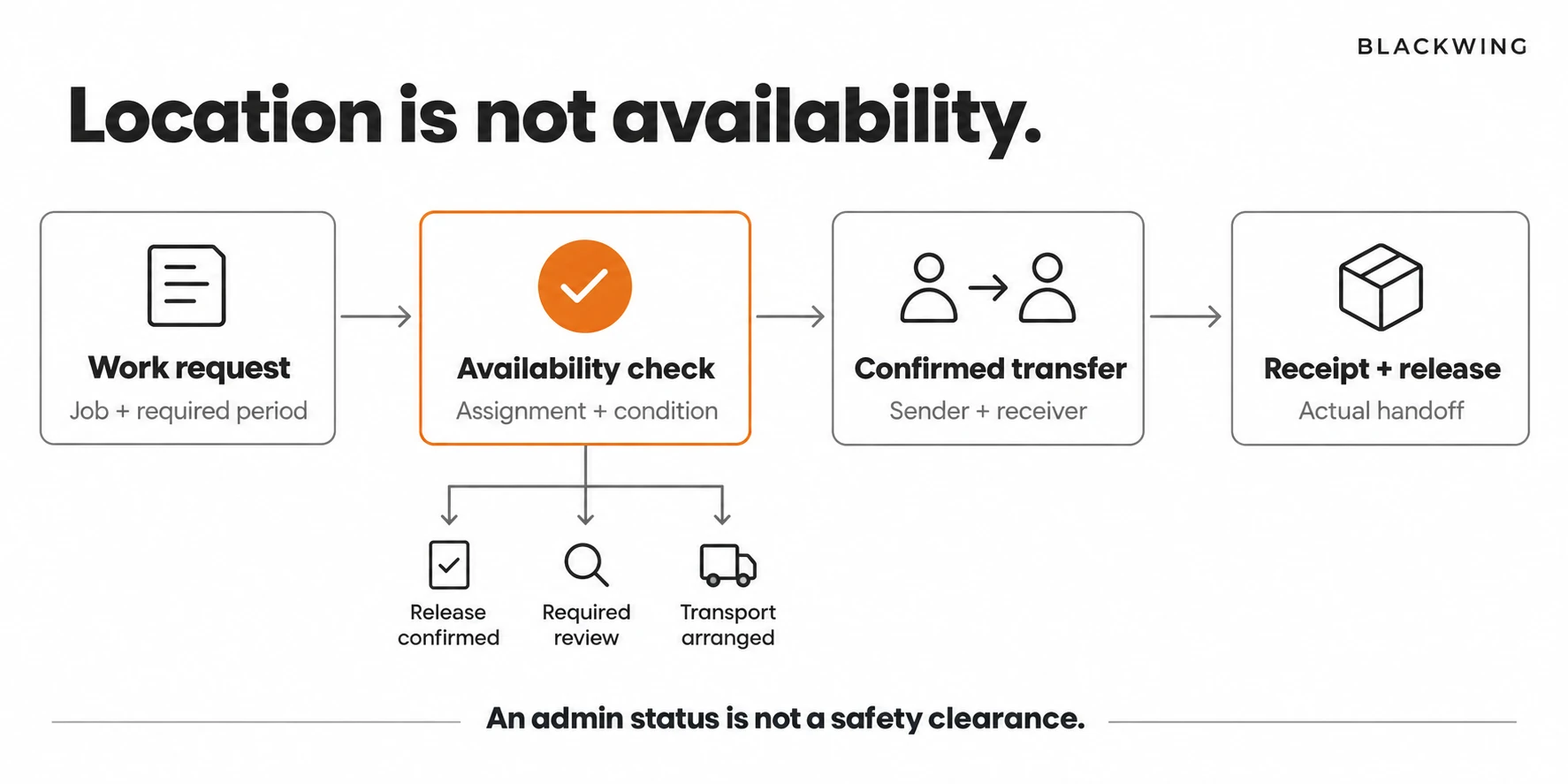
What Does Construction Equipment Tracking Cover?
Equipment tracking is the controlled record of an asset's identity, location, allocation, relevant condition, and movement. It can cover owned or rented equipment, depending on the company's responsibilities.
Procore's fleet-management overview treats equipment coordination as broader than simply owning the right assets. Our focus here is the operating handoff between jobs, not vehicle telematics or a fleet-maintenance engineering program.
Suitability, inspection, maintenance, operator competence, transport, and safe use require the applicable qualified review and procedures. A tracking status is not a safety clearance.
Separate Location From Availability
An asset can be at the yard and unavailable because it needs review or repair. It can be at a job and available only after the current task is finished and the release is confirmed. It can be booked for a future project without its transfer being arranged.
Use separate fields for current location, current assignment, expected release, confirmed release, condition or review state, next request, and transfer plan.
Do not ask one status called "Available" to carry all that information. It will become unreliable as soon as the first exception appears.
Build a Simple Equipment Coordination Workflow
Request by work requirement
Record the job, activity, required equipment capability, requested period, site contact, and relevant constraints. Let the qualified person determine suitability where specialist judgment is needed.
Do not assign an asset just because its name looks close to the request. Equipment matching is not a substitute for technical or safety review.
Check the actual availability
The coordinator checks the existing assignment, release confirmation, relevant condition state, and required transport or access arrangements. Where a prerequisite is missing, keep the request provisional.
Link equipment coordination to the crew scheduling process. Sending people to a ready site without the required asset is still a readiness failure.
Confirm the allocation and transfer
Record who authorized the allocation, when the asset will leave its current location, who receives it, and what acknowledgement is required.
If transport is arranged through an outside provider, distinguish a request from the provider's actual confirmation. Do not turn "message sent" into "collection booked."
Record receipt and exceptions
The receiving person confirms the asset identity and the information required by the company's receiving procedure. Relevant condition or missing-accessory concerns go to the designated responsible person.
Keep specialist inspection and safe-use requirements separate and explicit. A receipt checkbox confirms a handoff, not that every operating requirement has been satisfied.
Confirm release, return, or the next move
When work is complete, the current site confirms the release. The coordinator then arranges the appropriate next assignment, return, or required review.
For rented items, keep the company's actual return or off-hire obligations visible and obtain the appropriate confirmation. Do not assume a site message ends a rental or its charges.
A Minimum Equipment Register
| Field | Purpose | Useful distinction |
|---|---|---|
| Asset reference | Identifies the specific item | Not only the equipment type |
| Current location and owner | Shows who can verify its state | Known location versus assumption |
| Current assignment | Links the asset to active work | Planned versus actual use |
| Expected and confirmed release | Supports the next job | Forecast versus commitment |
| Condition or review state | Exposes an unresolved prerequisite | Received versus cleared through required checks |
| Next allocation and transfer | Makes movement executable | Requested versus confirmed |
Protect commercially sensitive or security-related information and grant access according to responsibility. The entire register does not need to be open to every supplier.
An Illustrative Double Booking
Imagine a small contractor using one shared asset across two jobs. Job A expects to finish on Wednesday. Job B books it for Thursday. Rain delays Job A, but the office calendar is not updated and the transfer remains assumed.
In the improved process, Job B's allocation is provisional until release and transfer are confirmed. When the forecast changes, the coordinator records the conflict, names the decision owner, and communicates the revised plan to both site leads.
This does not remove the weather delay or guarantee an alternative. It prevents a forecast from being mistaken for confirmed availability. The example is illustrative, not a reported company result.
Track Exceptions, Not Just Assets
Review equipment requests without confirmed release, transfers without a recipient, unresolved condition issues, and rentals without the required return confirmation.
Those exceptions are usually more useful than a long inventory view during a coordination meeting. Every exception needs a next action and an owner, not another colored cell.
You can start in a spreadsheet if the update process is reliable. GPS, telematics, and specialist fleet systems may add value later, but they do not decide who confirms a handoff.
Keep the Process Proportionate
Start with the assets that regularly create coordination problems. Do not attempt to document every small hand tool in the same level of detail as a shared critical asset.
Test the workflow with a normal transfer and a delayed release. Check whether the team can find the current record on its devices and whether changes reach the affected people.
Conclusion: Availability Is a Verified State
Construction equipment tracking works when it separates forecasts from confirmations and location from readiness. Give each important asset a clear record and each move a clear handoff.
Blackwing helps construction businesses connect resource planning, field updates, and practical workflow systems. Book an operations review if equipment coordination still depends on who last spoke to the owner.
Frequently Asked Questions
What should a construction equipment tracker include?
Include the asset reference, location, current assignment, responsible contact, expected and confirmed release, relevant condition or review state, next allocation, transfer plan, and receipt or return confirmation.
Is GPS enough to manage equipment availability?
No. Location data can help identify where an asset is, but it does not necessarily confirm release, suitability, condition, transport arrangements, or required operating checks. Those states need their own records and responsible people.
How can a small contractor prevent equipment double booking?
Use one allocation view across jobs and distinguish provisional requests from confirmed assignments. Confirm release, relevant readiness checks, and transfer arrangements before treating an asset as available to the next project.
Does an available status mean equipment is safe to use?
No. Administrative availability is not safety clearance. Applicable inspections, maintenance, operator requirements, suitability, and safe-use procedures remain the responsibility of qualified people under the relevant requirements.