
Which drawing revision did we price? What did the customer agree to provide? Was that allowance confirmed? Why is the subcontractor's quote different from the number in the budget?
A construction project handover from estimating to operations transfers the scope, assumptions, commercial decisions, and delivery constraints behind the winning bid. This article is about that post-award handoff, not the final handover of a completed building to its owner.
Sending the estimate is part of the job. Transferring the reasoning behind it is what makes the estimate usable.
The project team needs more than the final number
An estimate is built from decisions. Quantities, productivity assumptions, supplier quotations, access arrangements, exclusions, and allowances all affect what the team expects to deliver.
Some decisions are explicit in the documents. Others are buried in correspondence or remembered by the person who prepared the bid. If they do not reach operations, the project team may unknowingly plan around a different version of the job.
Procore's construction workflow guidance treats estimating-to-project-management handoffs as a process that needs defined tasks and responsibilities. That is the useful starting point: make the transfer a defined piece of work, rather than assuming it happened because the files are accessible.
I would judge the handoff by what the receiving team can explain and act on. The number of attachments is a poor substitute.
Create a short handover brief with links to the evidence
The brief should identify the decisions that matter and point to the controlled documents behind them. It should not duplicate the entire project folder.
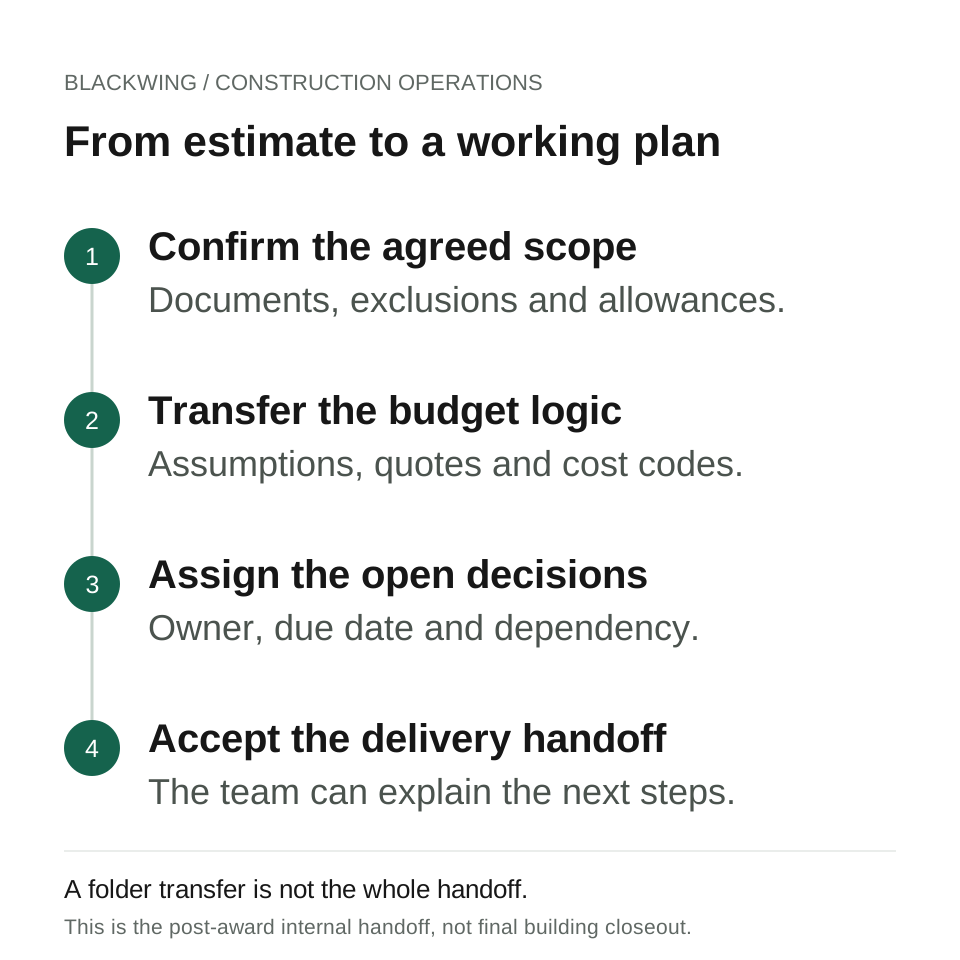
Confirm the agreed scope and document versions
Record the executed agreement, accepted scope, relevant drawings and specifications, revisions, exclusions, allowances, and outstanding clarifications. Separate what was proposed during bidding from what was finally agreed.
If a verbal understanding has not been reflected in the required documents, flag it for the authorized person to resolve. Do not convert a sales recollection into a contractual promise by putting it in a handover note.
Explain how the budget was built
Transfer the estimate breakdown, significant supplier and subcontractor quotations, labor assumptions, and the cost categories operations will use. Identify quotes that need reconfirmation and allowances that still need decisions.
When the estimate and job-cost system use different categories, map them before the team begins reporting against the budget. This makes later construction job costing a comparison of like with like.
Surface the constraints that affect the start
List known access restrictions, long-lead purchases, required submissions, dependencies, customer-provided items, and decisions needed before particular activities can begin.
Assign each open item to a person with a due date. “Check with the customer” does not tell the team who is checking or when the answer becomes critical.
Hold a working handoff meeting
Bring together the estimator, receiving project manager, relevant field lead, and the people needed for purchasing or financial setup. Not every project needs a large meeting. It needs the people who can explain the bid and take responsibility for delivery.
Walk through the scope, budget logic, constraints, and unresolved decisions. Ask the receiving team to explain the first part of the delivery plan using the information provided.
An external preconstruction meeting may cover additional parties and project requirements. Procore's preconstruction meeting guide describes that broader coordination. Your internal estimating handoff should prepare your team for it, not be mistaken for a replacement.
Use the meeting to resolve gaps. A presentation followed by “any questions?” can leave everyone politely uncertain.
Test the handoff against a realistic problem
Consider an illustrative interior-fit-out project. The estimator assumed that material deliveries could use a service entrance during normal working hours. After award, the project manager learns that access is limited to an evening window.
That difference may affect labor, handling, sequencing, or the delivery plan. The point is not that every restriction creates entitlement to extra payment. The point is that the team needs to identify the assumption and route the decision before planning the work around it.
A usable handover makes the access assumption visible, links the supporting information, names who must confirm it, and shows which activity depends on the answer. Without that, the team can discover the issue only after people and materials are already committed.
This is why I would include an assumptions review even when the estimate itself looks complete.
Define what accepted means
An accepted handoff does not mean every uncertainty has disappeared. It means the receiving team has the required information, understands the material gaps, and knows who owns them.
A practical acceptance checklist can ask:
- Can the project manager identify the agreed scope and current document set?
- Can the team reconcile the delivery budget with the estimate?
- Are important assumptions, exclusions, and unresolved decisions visible?
- Are initial procurement and mobilization dependencies assigned?
- Are customer communication, approvals, and change-control responsibilities clear?
For a gap that prevents a particular activity from starting properly, record the dependency and route the decision to the authorized owner. Do not let an internal checklist override contractual obligations or safety requirements.
Keep the handover alive after the meeting
Once the job starts, new information will arrive. Maintain one controlled location for current documents and decisions. Preserve earlier versions where needed, but make it clear which version the team should use.
Agree how post-award changes move into the budget, schedule, and field instructions. The change order process should take over when the agreed position changes, rather than allowing the handover brief to become a second, unofficial contract record.
After the first phase of work, review which missing information caused avoidable questions or rework. Use that feedback to improve the next handoff instead of adding another mandatory field for every possible scenario.
Make the transition part of winning the work
A bid is commercially useful only if the business can deliver what it agreed. The estimating-to-project-management handoff deserves an owner, a defined output, and acceptance by the receiving team.
Blackwing helps teams map and document these operational handoffs, then build them into working systems. Book an operations review to examine the gap between winning a job and starting it with a shared plan.
Frequently asked questions
What is an estimating to project management handoff
It is the structured transfer of the winning estimate, agreed scope, assumptions, commercial decisions, and delivery constraints to the team responsible for executing the project. It is different from final project closeout or building handover.
What belongs in a construction handover checklist after award
Include current scope documents, estimate and budget mapping, key quotations, assumptions, exclusions, procurement dependencies, approval responsibilities, and unresolved decisions with owners. Link to controlled source documents rather than duplicating everything.
Who should own the internal project handover
The business should name an accountable owner for preparing the handover and a receiving project manager who confirms readiness. Estimating, field, purchasing, and finance roles contribute the information needed for that project.
Can a project start with open handover items
Some uncertainties may remain, but their effect on planned activities must be explicit. Assign owners and deadlines, identify any prerequisites, and have authorized project leaders decide how to proceed under the contract and applicable requirements.