
By then, the work is easy to see. The agreement is harder to find.
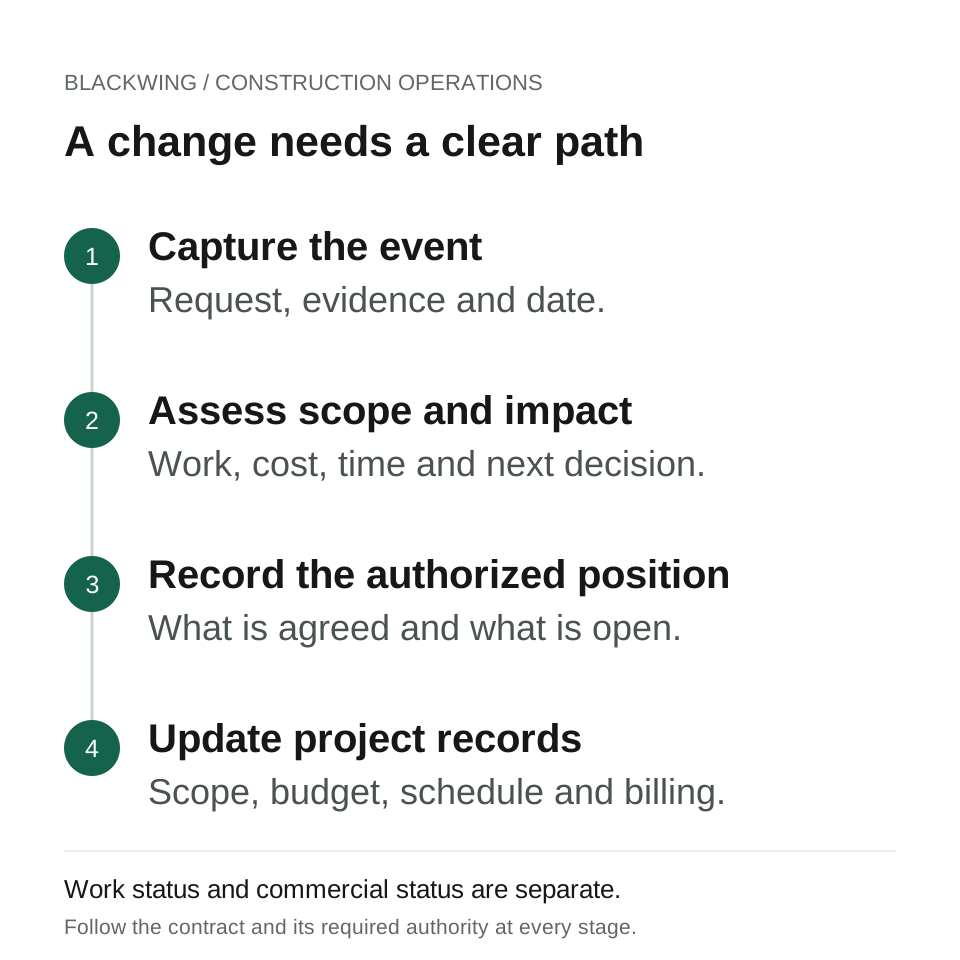
Construction change order management is the process of identifying, documenting, assessing, authorizing, and tracking changes to contracted work. The exact approval and notice requirements come from the applicable contract and law. The operating challenge is making sure the business follows that process while the project is moving.
For a contractor, an informal conversation can become labor, materials, and schedule exposure before anyone has opened a change record. That is the gap worth fixing.
A request is not the same as an approved change
Keep four things separate: someone requested a change, the team assessed it, the required parties authorized it, and its commercial treatment was recorded.
Those events may happen at different times. A drawing revision, an RFI response, or an instruction can require review without automatically establishing agreement on price or time.
AIA Contract Documents explains how its change-order framework addresses changes to the work, contract sum, and contract time. That is one contractual framework, not a substitute for checking the terms of your own project.
The operational lesson is straightforward. Do not use a single “approved” checkbox to describe several different decisions. Record what was authorized, by whom, under which document, and what remains unresolved.
Capture the event while the evidence still exists
Give the field team a quick way to record a possible change. It should not require them to price a claim or make a contractual judgment beside the work area.
An initial record can capture:
- The project, location, and date.
- What was requested or discovered, and by whom.
- The drawing, instruction, or scope item involved.
- Photos or other relevant supporting evidence.
- Work affected and any immediate constraint.
- The person who needs to assess the next step.
Use a unique change ID. Keep the original record when later information arrives, with dated additions rather than silently replacing the history.
This is a record of an event, not a promise that the customer owes money. The responsible project or commercial lead still needs to determine how the contract treats it.
Assign the next decision instead of sending another message
A useful change order process has named responsibility at each stage. The field lead records the event. The project manager checks the scope and coordinates the assessment. The estimator or relevant trade specialist develops the cost and time implications. The authorized person handles the contractual submission and decision.
In a smaller contractor, one person may perform several roles. That is fine. The responsibilities still need to be explicit.
For example, imagine an electrical subcontractor receives a request to relocate several outlets after installation. This is an illustrative scenario, not a client case. The supervisor records the locations and instruction. The project manager compares the request with the agreed drawings. The estimate considers removal, replacement, access, and any affected sequence, rather than just the new material.
The useful question is no longer “did someone tell the office?” It is “who has the record, and what decision is due?”
Give unresolved changes a visible status
Use stages that describe the actual position. A simple register might distinguish identified, under assessment, submitted, awaiting decision, authorized, and closed. Keep rejected or withdrawn items visible with their outcome.
Track work status separately from commercial status. Work may be underway under a valid contractual direction while valuation remains unresolved. Equally, a priced proposal may not authorize the crew to proceed.
Do not turn a workflow diagram into a blanket rule to stop work whenever agreement is incomplete. Urgent conditions, safety obligations, directives, and notice requirements need the project-specific response agreed with qualified advisers. Route those exceptions to the person with authority, and preserve the record.
For each open change, show its owner, age, next action, relevant deadline, estimated exposure, and supporting documents. Unknown amounts should be marked unknown, not entered as zero to make the report look complete.
Connect authorized changes to the rest of the job
A signed document sitting in a folder is not the end of the process. Confirm that the relevant scope, budget, schedule, purchasing instructions, and billing records reflect the authorized position.
When a change affects cost, the project forecast needs to show it. When it affects time, the people coordinating the work need to understand the revised sequence. When it becomes billable, finance needs the right evidence and contractual billing treatment.
Keep pending recovery separate from approved contract value in your construction job costing. Then follow eligible amounts through the construction billing process. Otherwise, a change can be approved commercially and still disappear between systems.
Review the exceptions before they accumulate
Hold a short review of changes that need a decision, are approaching a contractual deadline, or have a growing gap between work performed and commercial resolution.
Review age and exposure together. A small item with a deadline tomorrow may need attention before a larger proposal submitted yesterday. Make the review produce an owner and next action, not another list of everything waiting.
You can measure the time from identification to assessment, items submitted without required evidence, and authorized changes not yet reflected in project records. These measures show whether the process is working. They do not prove every submitted change is recoverable.
Make change control practical enough to use
The team needs a process that works when the project is busy, not only when someone has time to tidy the register.
Start with one recent change. Trace its record, decisions, and downstream updates. Then use process mapping and documentation to define the handoffs and exceptions your people actually need.
Blackwing can help build that operating process into the tools the team uses. Book an operations review to examine where changes lose ownership or visibility. Contract interpretation and legal rights remain with your qualified advisers.
Frequently asked questions
What should a construction change order process track
Track the requested change, supporting evidence, scope assessment, cost and time implications, required authorization, work status, and downstream updates. Use the project's contract to determine notice, approval, and submission requirements.
Is an RFI response an approved change order
Do not assume that an RFI response settles authorization, price, or time. Its effect depends on its content and the contract. Have the responsible project or commercial lead assess it and record any further action required.
How can contractors reduce missing change documentation
Make initial capture simple, assign a unique change ID, and name the person responsible for assessment. Keep supporting evidence with the record and review open exceptions before details are lost.
Should pending change orders appear in a job forecast
Show their costs, possible recovery, and status clearly. Keep unapproved recovery separate from approved contract value in the base management forecast so uncertain revenue does not conceal current exposure.