
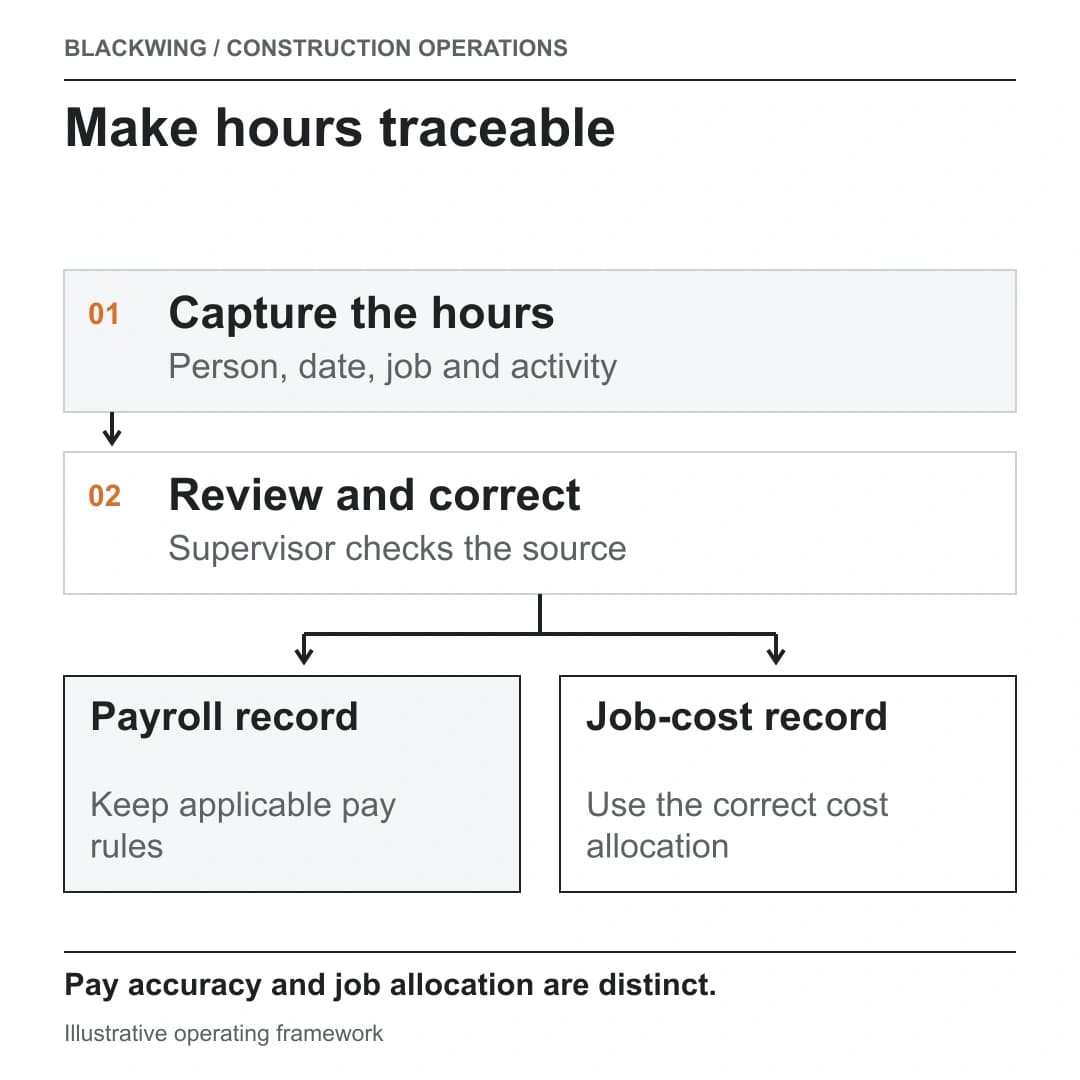
Capture enough context to explain the hours
At minimum, decide which fields your operating process needs: worker, date, project, work location or phase where relevant, activity or cost code, hours, and any time type required by the company’s approved process. Procore’s timesheet tutorial documents fields in its product such as project, cost code, location, hours and time type. That describes one system’s capabilities, not a universal recordkeeping standard or a legal-compliance guarantee. (Procore timesheet tutorial; Procore project timesheets)
Make entry close enough to the work that the person recording it can identify what the hours represent. If a crew changes projects, activities or locations during a shift, the process should capture that change in a way the reviewer can interpret. Avoid asking people to reconstruct a week from memory when source evidence is available.
Validate coding before approval
The reviewer should check more than the total. Compare the entry with the schedule, assignment, field record or other approved source available to the company. Confirm that the job and activity exist, the code is appropriate for the work recorded, and the entry is not duplicated or missing context. Route unclear entries back for correction rather than quietly guessing.
Keep a correction trail. A useful record connects the original entry, what was changed, why, who made or approved the change, and the supporting context. The exact workflow depends on company systems and applicable rules. Any wage, overtime, break, retention or payroll requirement should be checked with a qualified local specialist; this article does not prescribe those practices.
Hypothetical example
A worker records a full day under one project code, but a supervisor’s approved daily assignment shows the worker moved to another job for part of the shift. The reviewer does not simply split the hours based on a rough estimate. They check the available source with the worker or responsible lead, document the corrected allocation and reason, and send the approved record through the company’s payroll and job-cost processes. If the evidence does not support a reliable correction, the exception remains open for the authorized process.
The total hours may not change, but the project record now tells a different story. This is why time capture, payroll accuracy and cost allocation need connected evidence while remaining separate outputs.
Treat payroll and job costing as different destinations
An approved time record can feed more than one process. Payroll determines pay through its authorized controls. Job costing groups labor against work for project reporting and analysis. Those systems may use some common source fields, but an allocation change should not silently alter payable hours or vice versa.
Define the handoff owner for each destination, how rejected records return for correction, and how reconciliations are performed. Keep access and approval roles aligned with company controls. If teams see frequent miscoding, investigate whether the project list, cost-code names, field interface, or training creates confusion before adding another approval layer.
For project cost analysis beyond labor capture, see construction job costing. For the field narrative that explains daily events, see construction daily reports and field communication. A time entry and a daily report can support each other, but they answer different questions.
Make codes understandable at the point of entry. If several cost codes look alike on a phone screen, workers may choose the first familiar label. Keep a current code list, remove obsolete choices where possible, and describe activities in language crews recognize. A short field guide can help, but it should follow the company’s coding structure rather than turning one project’s exceptions into universal rules.
Look for repeated exceptions as a process signal. Missing project IDs may mean assignments are not reaching workers before the shift. Frequent corrections to one code may point to confusing labels or a changed scope. Late approvals might reflect unclear responsibility or an unavailable reviewer. Review patterns with the people who enter and approve time before adding another approval layer.
Define a route for entries that cannot be verified and keep them visible until an authorized decision is made. Avoid silently distributing uncertain hours across jobs to make a report balance. The record should show known facts and the unresolved question. Timely review matters because the worker and supervisor can still confirm what happened while the shift is recent.
Four questions about construction time tracking
Why do correct total hours still produce poor reports?
Hours can be assigned to the wrong project or activity. Total time and cost allocation are separate checks.
Who should review corrections?
The supervisor or administrator named by the company’s approved payroll and job-cost processes. The role should be authorized for the kind of change being made.
What should a correction record include?
Retain the original context, reason, supporting source, person making the correction, and the authorized approval or review trail.
Does time tracking establish legal compliance?
No. A timekeeping tool can capture information, but it does not by itself determine applicable pay rules or prove compliance. Seek qualified local guidance.
Make every hour explainable
Use clear codes, timely capture and a correction process that preserves the source. When payroll and job-cost teams can trace an entry to its evidence and approval, the same hours can support their distinct purposes without obscuring what changed. If your field-to-office handoffs need redesign, request an operations review.
Written with the help of Laura, Ahmed Fahmy’s AI assistant, based on his ideas and under his supervision.