
Weather does not create one universal response. The relevant conditions, work activities, equipment, location, and applicable procedures all matter. This article offers an administrative planning framework, not weather thresholds, safety instructions, contract advice, or a determination of schedule entitlement. Qualified people must assess conditions and follow the project’s approved requirements.
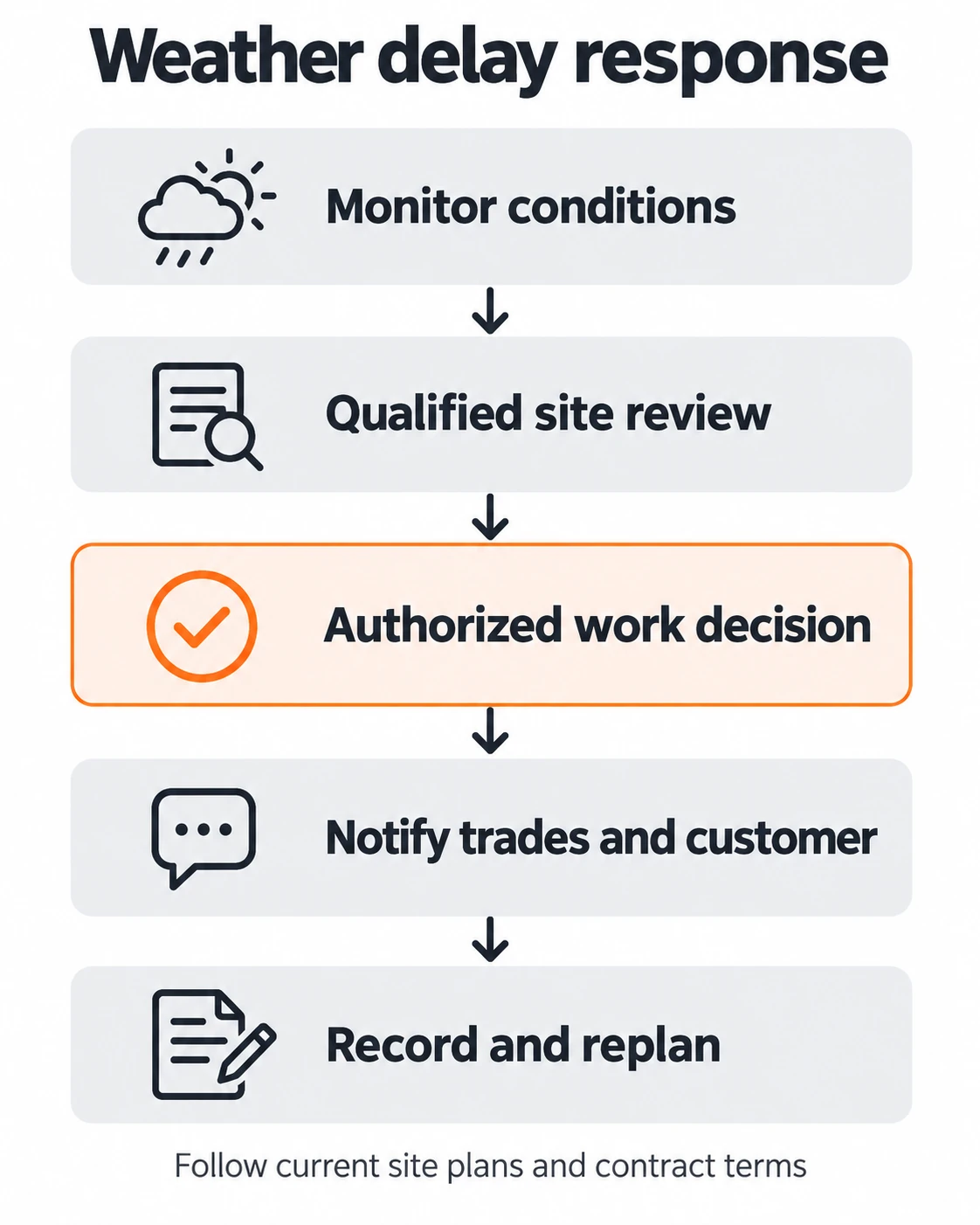
Agree on the monitoring routine
Choose the source or sources the project will monitor and name the person responsible for checking them. Record the time of the check and the work or location the forecast concerns. A forecast is information for planning, not a confirmation of conditions at the site or a decision about whether work can proceed.
Set a practical review cadence based on the work and the project’s own procedures. Identify when the team will check again and how a material forecast change will reach affected participants. Keep the routine simple enough to follow. If multiple sources provide different information, route the question to the designated person rather than allowing each trade to make conflicting assumptions.
Do not use a generic article or an automated alert to set universal stop-work thresholds. Those decisions belong to authorized people applying the appropriate project procedures and professional judgment to current conditions.
Route assessment to qualified people
When conditions may affect planned work, gather the facts that help the responsible person assess the situation: the affected area or activity, the expected timing, current observations from an appropriate source, and any known constraints. Be precise about what is observed versus forecast. Avoid presenting a summary as a technical assessment if the author is not qualified to make one.
Some hazards are activity- and condition-specific. The U.S. National Weather Service’s workplace lightning guidance discusses outdoor work and exposure around open areas and tall objects. OSHA’s cold-stress guidance advises employers to monitor workers’ physical condition. These sources illustrate that different conditions call for relevant assessment; they do not establish a universal threshold or replace applicable procedures and qualified decisions. National Weather Service: Lightning Safety on the Job · OSHA: Cold Stress
Maintain a clear boundary between reporting and deciding. The person who sees a condition may report it. A designated supervisor, safety professional, or other authorized role applies the relevant procedure and makes the decision within their authority. The tracker should capture the decision and its source, not create a rule of its own.
Make the work decision and its scope visible
Record what was decided, who made the decision, when it applies, which activities or locations it covers, and when it will be reviewed again. If the decision is limited to a specific operation, say so. If new information arrives, route it to the decision owner. Avoid broad labels like “weather delay” when the work impact is still being assessed.
Keep schedule planning separate from contractual conclusions. A coordinator can record the affected activity, planned sequence, notice sent, and proposed replan. Questions about notices, time extensions, cost, or contractual rights should go through the authorized contract and project process. Do not promise an entitlement based on a forecast or a template.
Illustrative example: A project’s monitoring routine flags a change that may affect a scheduled outdoor activity. The coordinator identifies the activity and location, alerts the designated assessor, and records the authorized decision with its time and scope. The team then updates the schedule and communicates the next review point. The example illustrates information flow only; it does not set a threshold or say what decision a project should make.
Notify, record, and replan
Use a defined notification list so the affected people hear the same decision. The message should state the activity or area, the decision owner, the current direction, the time it takes effect, and when the team expects another update. Include only the information recipients need. If someone must acknowledge or take action, name that person and specify the next step.
Keep a concise event record: source and check time, relevant observation or forecast, assessment owner, decision, affected scope, notifications, schedule change, and follow-up. Link supporting records in the approved project system. Preserve later updates as a sequence rather than overwriting the original decision; the timeline helps readers understand what changed.
Replanning should identify the next feasible activity, its dependencies, and the person responsible for confirming the revised sequence. Check with affected trades before shifting dates. A weather-related change to one task may affect access, deliveries, equipment, or another team’s work. Update the shared schedule and the people who rely on it.
Learn from the pattern without inventing a rule
At a suitable project review, compare the planned response with what happened. Did the forecast check reach the right people? Was the assessment owner clear? Did the team know who could decide? Were notices and schedule changes recorded? Use evidence from the project record to improve coordination.
If recurring gaps suggest a process change, propose it for review under the organization’s normal governance. Do not turn one project’s workaround into an approved policy without that review. The response process should be easy to understand, current, and aligned with the project’s actual authority structure.
Teams working to clarify recurring ownership and exception handling can explore Business Process Mapping & Documentation. For a focused conversation about delays, rework, quality, or management effort, book a 30-minute Operations Review. These services support operating-process discussions; they do not provide safety, legal, meteorological, or contractual determinations.
Frequently asked questions
Can a forecast alone decide whether work stops?
No. A forecast is an input. The authorized person must assess the current situation, activity, location, and applicable project procedures before making a work decision.
Who should make the weather-related work decision?
The project should identify the role authorized to decide for the affected work. The appropriate person depends on the project and its procedures. A coordinator can route information and record the decision without assuming decision authority.
What should the delay record contain?
Capture the information source and time, affected work, assessor, decision-maker, decision scope, notifications, schedule impact, and next review or action. Keep forecasts, observations, and decisions clearly distinguished.
Does bad weather automatically create a schedule extension?
This article cannot determine contractual rights or schedule entitlement. Review the governing agreement and project process with the authorized contract or legal adviser, and preserve the relevant project records.