
Understand the material before placing another order
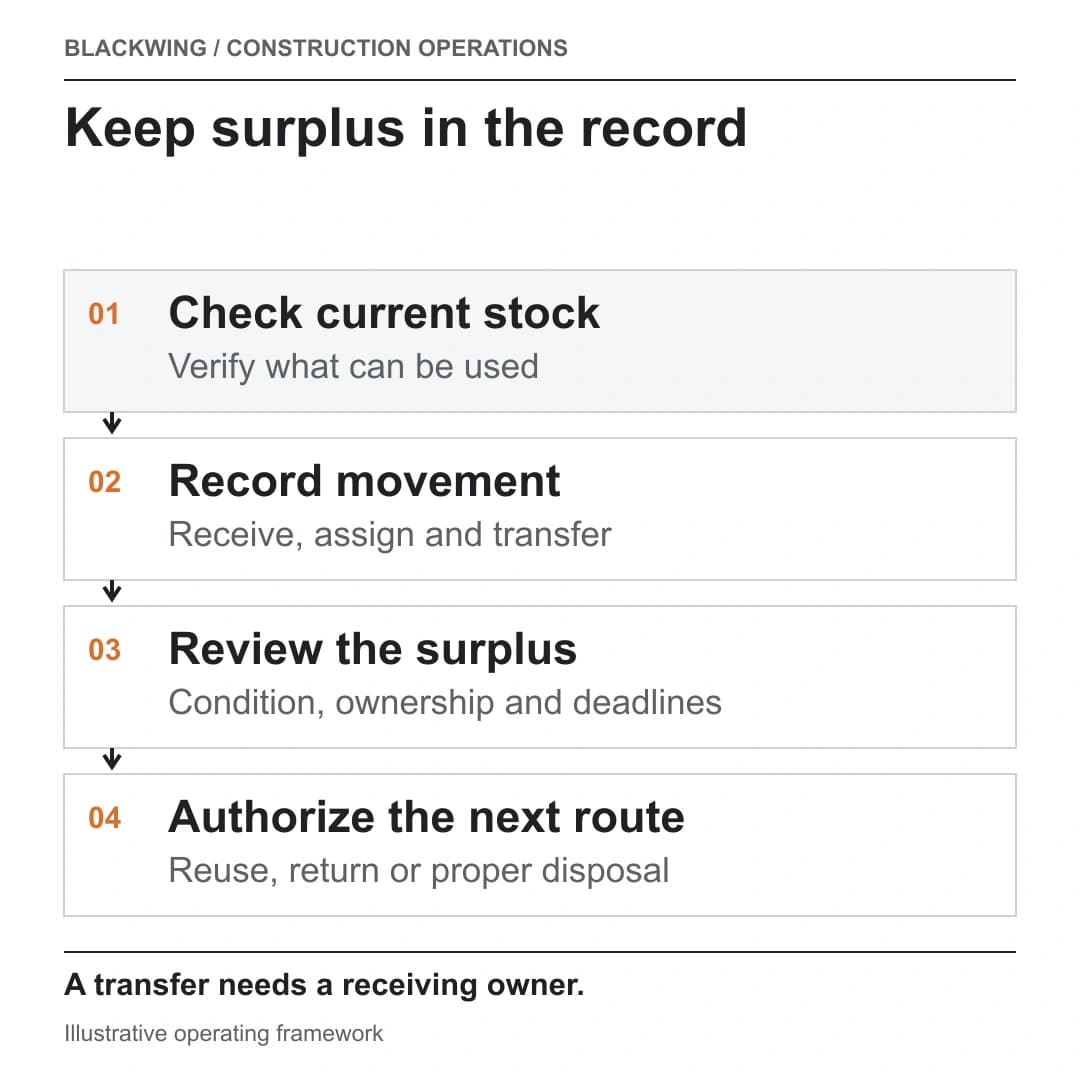
Before requesting new material, compare the project’s current need with what has been ordered, received, assigned, transferred, used, damaged or left in storage. Distinguish material physically available from material already promised to another job. Record the source, quantity, unit, condition, location and responsible person so a count can be checked rather than copied forward.
The U.S. Environmental Protection Agency describes source reduction, reuse and recycling as approaches to managing construction and demolition materials. Its national generation figures are historical 2018 data, so they should not be presented as current performance for an individual contractor. The agency also provides project guidance on reuse and recycling options. (EPA construction and demolition materials; EPA deconstruction manuals)
Keep movement and ownership visible
Use a simple material record with the item description, quantity and unit, source job or stock area, destination, movement date, condition and receiving owner. Capture damage or shortage when observed and link it to the delivery or purchase record. A transfer needs a receiving owner; without one, inventory can look available in a record while no one can find or verify it.
Hypothetical example
After a room layout changes, a project has unopened boxes that may fit another active job. Before a duplicate purchase, the project lead confirms quantity and condition, checks product and finish details, and records the proposed transfer. The receiving project verifies that the material meets its requirements and accepts custody in the record. Any remainder is then reviewed against supplier return terms and the company’s approved disposition procedure.
This process does not guarantee savings. It creates evidence that can prevent an unnecessary reorder when the material is suitable and genuinely available.
Review surplus early enough to act
Create a surplus check at useful points: after design or quantity changes, after receipt reconciliation, when a phase is complete, or before supplier return deadlines. Assign an owner and date. Ask whether the material is still needed, whether another project can use it, whether the supplier accepts a return, and what documentation is required.
If material is damaged, contaminated, regulated, or otherwise unsuitable, do not improvise disposal instructions from a general article. Follow the applicable local requirements and project procedures with qualified support. Record the decision and destination in the company’s system.
The operational boundary matters: procurement controls establish what was ordered and accepted; this process follows material after receipt through assignment, transfer, surplus review and disposition. See construction procurement and supplier quote changes for the upstream purchasing handoff and site logistics planning for location and movement coordination. Job-level costs can be reviewed through construction job costing.
Feed actual results back to ordering
At project close or phase completion, compare estimated need, actual receipts, transfers, usage and remaining stock. Note where the estimate or site conditions changed. Use that record to improve the next quantity takeoff or purchasing check, while preserving the context for unusual projects. Do not use one job’s surplus as a universal waste rate.
Make the inventory check practical for the people doing it. Choose a location reference they can identify, units that match supplier packaging, and a way to distinguish usable, reserved, damaged and unknown-condition stock. If a count cannot be verified, label it unconfirmed and assign a follow-up rather than presenting it as available quantity.
Coordinate the review with purchasing before return windows close. The purchaser may need the original order, delivery record, packaging condition or supplier authorization. Keep those documents connected to the material record. A return request is not the same as a completed return; retain evidence of supplier acceptance or credit.
For transfers, verify compatibility and authority before moving material. Similar descriptions can hide differences in size, finish, rating, batch or specification. The receiving project owner should confirm suitability against current approved requirements. Record rejected transfers too, since the reason may prevent another mistaken order or movement.
Four questions about material surplus
How can a contractor find surplus before reordering?
Reconcile receipts, transfers, known use, damage and on-hand stock. Verify the material’s quantity, condition, specification and ownership before relying on it.
What should a transfer record contain?
Record the material and quantity, source and destination, date, condition, and person who releases and receives it.
Can unused materials always be returned?
No. Check supplier terms, product condition, packaging and deadlines. Return eligibility varies by supplier and item.
How should unusable material be handled?
Follow the applicable local requirements and project procedures, especially where material condition or classification is uncertain. Seek qualified guidance when needed.
Make the material trail useful
The goal is to know what the company has, where it went, what can still be used, and who approved the next route. A small, consistent record can connect purchasing decisions to what actually happened on site. If you need to map those handoffs across projects, request an operations review.
Written with the help of Laura, Ahmed Fahmy’s AI assistant, based on his ideas and under his supervision.