
Small contractors can deliver good work and still leave the customer with a confusing finish. Manuals are scattered. A supplier has the missing warranty information. Someone needs to return for one item, but nobody has booked access. The owner becomes the handover coordinator by default.
Finishing construction and finishing the operating handover are related. They are not the same task.
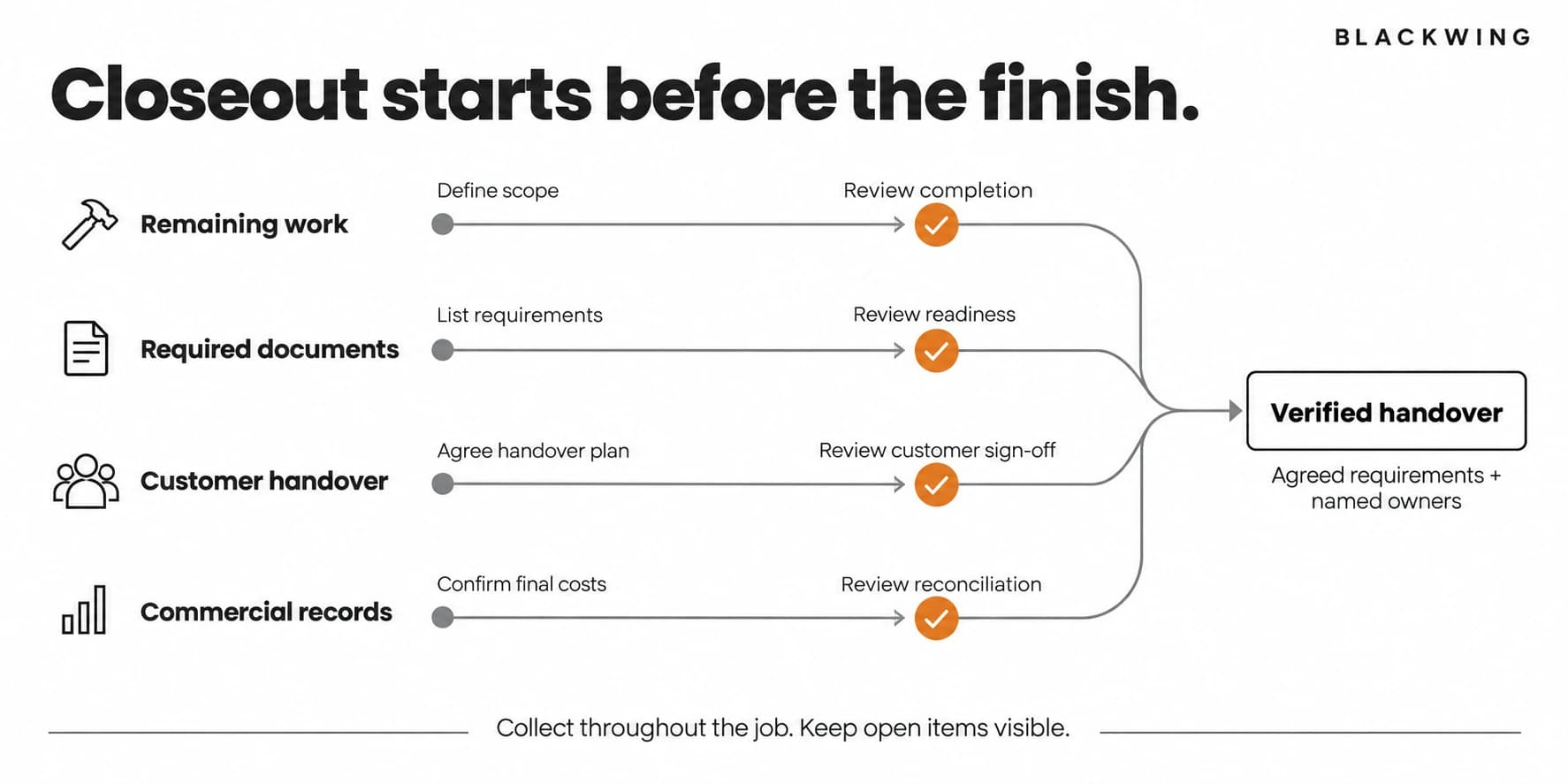
What Does Construction Closeout Include?
Closeout is the coordinated completion and handover of the project's required work and records. Its exact scope depends on the project and agreement. Autodesk's closeout overview describes document collection and organization as a distinct part of that process.
Typical operational categories include remaining work, required product or project records, customer information, authorized reviews, and commercial reconciliation. Do not treat a generic checklist as a universal contract or legal requirement.
Qualified project and professional advisers must determine formal completion, inspection, acceptance, payment, warranty, and retention obligations where relevant.
Build the Checklist From the Actual Project
At project setup, identify what the agreement and project procedures require at handover. Record who provides each item, who checks it, where it is stored, and when it is needed.
If a requirement is unclear, raise the question early. "We will work it out at the end" is not a plan for collecting information from a trade that has already moved on.
Keep responsibilities proportionate to the team. A small contractor may have one coordinator maintain the list and several people supply or review items. The coordinator should not become the unqualified approver of every technical document.
Organize Closeout Into Four Workstreams
Remaining work and verification
Link the current punch list, unresolved issues, and required checks. Record the next action and responsible party for each.
Use the construction punch list process to distinguish a correction reported from a correction verified. Closing a coordination task does not itself certify overall project completion.
Required documents
Collect applicable manuals, reviewed information, product records, final drawings or other required deliverables as work progresses. Check that each file is the right item and revision, not just that an attachment exists.
Maintain an index that a customer can understand. A folder named "Closeout" containing fifty unexplained PDFs is organized for the person who assembled it, not necessarily for the person receiving it.
Customer handover
Plan the handover meeting, required demonstrations or training, contact routes, and outstanding-item communication. Confirm who needs to attend and what decisions can actually be made there.
Explain what is complete, what remains open, and the route for questions. Avoid promises about warranty coverage or response times that have not been approved and supported by the agreement.
Commercial and internal closure
Identify outstanding changes, invoice or payment-document requirements, supplier or subcontractor reconciliation, and project-record archiving. Route accounting and contractual decisions to the authorized people.
The operating checklist should make these items visible. It should not prescribe payment release, waive rights, or replace legal and accounting review.
A Practical Closeout Register
| Workstream | Record to maintain | Completion evidence |
|---|---|---|
| Remaining work | Linked issue or punch item | Required verification recorded |
| Documents | Required deliverable and version | Appropriate review and usable file |
| Customer handover | Agenda, recipients, and open items | Handover record through agreed route |
| Commercial items | Outstanding decision or required record | Authorized reconciliation outcome |
| Internal archive | Final record location and owner | Access and retention route confirmed |
For each row, add a provider, reviewer, due date, status, and next action. Do not make every row simply "Office to chase."
Collect Information While the Source Is Available
A supplier's document is easier to identify when the corresponding delivery is current. A subcontractor's handover record is easier to clarify before its team has left the job.
This does not mean accepting incomplete records early. It means starting collection and review early enough to resolve the gaps.
Tie the closeout checklist to normal milestones. After an installation or trade completion, check what documentation or handover action that milestone triggers. Keep requirements connected to the work that produces them.
An Illustrative Last-Week Scramble
Imagine a small contractor finishing a retail fit-out. The physical work is nearly complete, but the customer requests operating information and a clear list of remaining items. The coordinator searches old supplier emails and asks several trades for missing files.
In the improved process, the closeout register already identifies those deliverables and owners. Collected files are checked as the project progresses, and the handover package separates complete records from outstanding items.
The team still has work to do. It now knows which work, who owns it, and what evidence will close it. This is an illustrative example, not a claimed client outcome.
Give the Customer a Usable Package
Use clear document names, a short index, and a verified access route. Test the links as the intended recipient rather than assuming your internal permissions apply to the customer.
Keep sensitive internal pricing, employee information, and unrelated project records out of the handover package. More files do not automatically make a better handover.
Where paper copies, specific formats, or formal submissions are required, follow the project requirements. Convenience does not replace the agreed delivery method.
Conclusion: Closeout Is a Process, Not a Folder
A construction project closeout checklist works when it connects obligations to owners, milestones, evidence, and a clear customer handover. Start early, review exceptions regularly, and keep technical and commercial authority explicit.
Blackwing helps construction companies map the full journey from delivery to handover and build systems that support it. Book an operations review to examine where projects remain operationally open after the site work ends.
Frequently Asked Questions
When should construction closeout start?
Closeout planning should start during project setup by identifying the actual handover requirements and owners. Collection and review can then follow relevant delivery milestones instead of being postponed until the last week.
What belongs in a construction closeout checklist?
Include required remaining-work verification, applicable documents, customer handover actions, unresolved commercial records, and internal archive responsibilities. Determine the specific requirements from the agreement, project procedures, and appropriate advisers.
Is a completed punch list the same as project closeout?
No. A punch list addresses identified remaining or nonconforming work. Project closeout can also include documentation, handover, required reviews, and commercial or internal records. The project's actual requirements determine the full scope.
How should a small contractor deliver closeout documents?
Use the required project format and a clear index, controlled versions, and tested recipient access. Separate outstanding items from completed deliverables and protect internal or sensitive information that does not belong in the customer package.