
For small and midsize contractors, the issue is often not that nobody is working. It is that the person correcting an item, the person checking it, and the person updating the record are looking at different information.
"The sub says it is fixed" is an update. It is not the same as verified closure.
What Is a Punch List?
A construction punch list records remaining incomplete or nonconforming work identified for correction near project completion. Procore's punch list overview explains its use for tracking outstanding items and responsibilities.
The project's contract and authorized parties determine acceptance, completion, and payment conditions. A checklist cannot establish those conditions on its own. Urgent safety, code, or serious technical issues need the proper immediate route, not treatment as routine finishing tasks.
This guide addresses coordination and record quality, not technical inspection or certification.
Write Items That Someone Can Actually Find
A vague item creates another discovery exercise. "Fix paint" could refer to several rooms, finishes, or problems. The subcontractor arrives and spends time asking what was meant.
Give each item a unique reference, exact location, plain description, relevant specification or agreed requirement where applicable, photograph, and date raised. Identify the person who raised it so questions can be resolved without guessing.
Use one item for one separately verifiable issue. If one row contains five corrections, a partial fix can make the entire row look complete.
Separate Correction From Verification
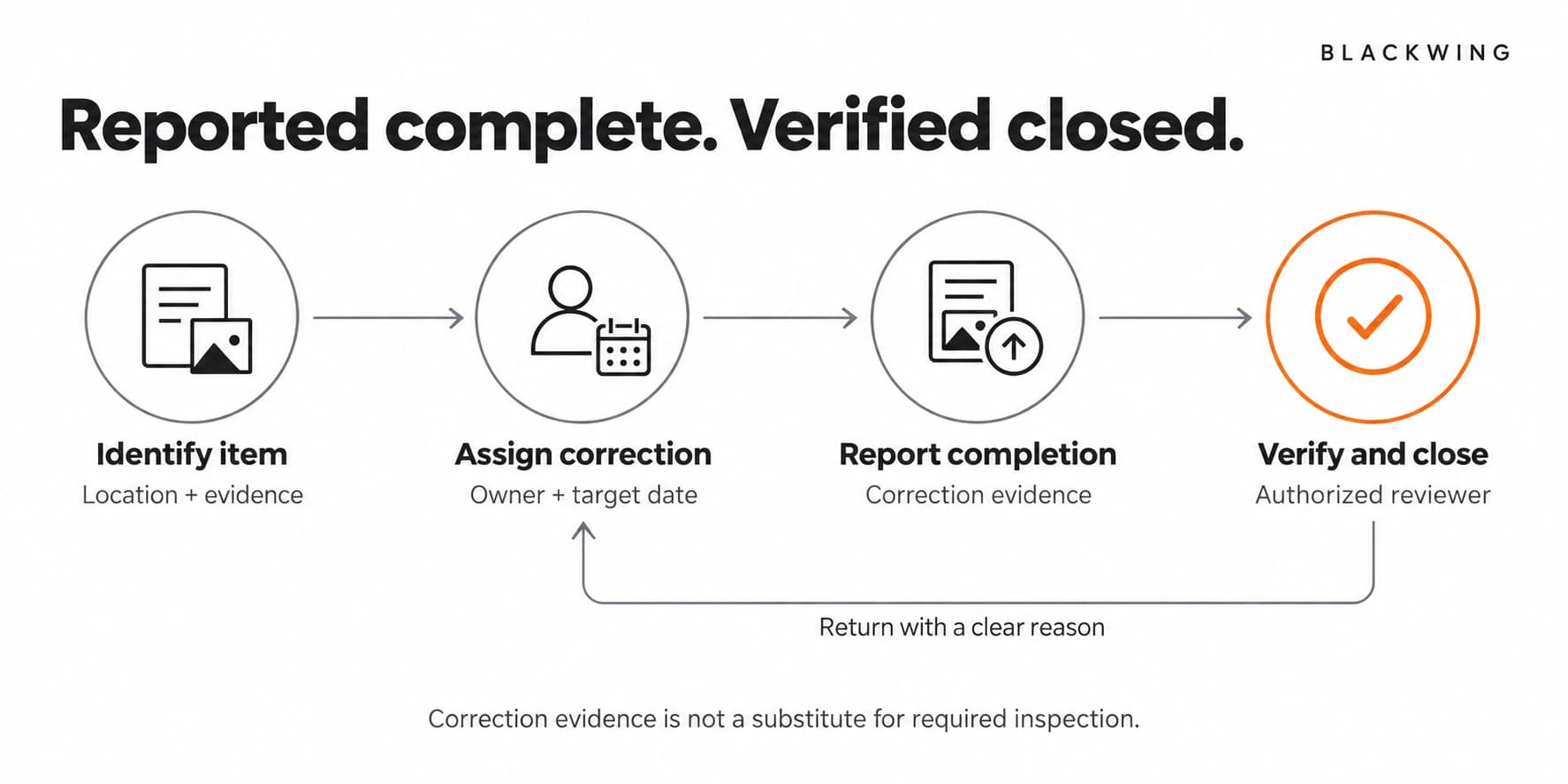
Assign one correction owner
Name the trade or person responsible for the next action. That does not mean transferring contractual responsibility through a spreadsheet. It means making the coordination task clear.
Agree the target date and access arrangements. If materials or another trade are blocking the correction, record the dependency and its owner rather than repeatedly resetting the date.
Define the evidence of correction
Specify what the reviewer needs: a clear photograph, a test record where applicable, a document, or an arranged site review. A photo may support a check but should not replace required specialist inspection or testing.
Keep the original item description and evidence. The corrected record should show what changed, not erase the issue that was raised.
Route verification to the right person
The authorized reviewer checks the work through the required project process. The correction owner can report completion, but should not automatically close its own item where separate verification is required.
If the item is rejected, record the reason and return it with a clear next action. "Not accepted" without an explanation simply restarts the confusion.
Confirm closure and preserve the record
Record who verified the outcome, when, and against which completion condition. Link any formal project acceptance record where required. Keep closure distinct from final project or payment approval.
Use a Short, Meaningful Status Set
| Status | What it tells the team | Next action |
|---|---|---|
| Open | Item is identified and assigned | Plan correction |
| Blocked | A specific dependency prevents action | Resolve named dependency |
| Correction reported | Responsible party says the work is complete | Provide required evidence |
| Awaiting verification | Evidence or review is ready | Authorized reviewer checks |
| Returned | Check did not meet the agreed condition | Correct stated issue |
| Verified closed | Required verification is recorded | Preserve closure evidence |
Map these internal states to the project's official system. Do not create a second acceptance authority.
An Illustrative Return-Visit Problem
Consider a remodeler with a door adjustment on its punch list. The trade reports that it is corrected. The office marks it complete, but the next walkthrough finds the original issue remains.
The revised process records the location and condition precisely, gives the trade an access window, and moves the item to "Awaiting verification" when correction is reported. It reaches "Verified closed" only after the required check.
The process does not guarantee the correction is technically adequate. It makes clear who must establish that and where the evidence belongs. This is an illustrative example, not a reported customer result.
Keep New Scope Out of the Punch List Shortcut
A customer's new preference, a defect correction, and an unfinished original obligation may require different treatment. Do not decide the distinction casually because all three appear during the final walkthrough.
Route disputed scope or technical interpretation to the appropriate project authority. Where a new request is an approved change, link it to the change order process rather than burying it in a punch item.
This protects the clarity of both registers. It does not decide contractual entitlement or responsibility.
Run a Focused Closeout Review
Review items that threaten the next milestone, need site access, have been returned, or remain without an owner. Group return visits sensibly, but never conceal incomplete work just to avoid a visit.
Use the list to answer three questions: what can be corrected now, what is blocked, and what is ready for verification? Raw item count alone cannot answer any of them.
Connect verified items to the project closeout checklist. Punch work is one part of closeout, not the whole handover.
Conclusion: Make Done Observable
A useful construction punch list process turns vague finishing work into identifiable items with clear correction and verification handoffs. Start with the quality of the record, then configure the tool around those states.
Blackwing helps construction teams build coordination systems that reduce dependence on verbal follow-up. Book an operations review to examine how your team assigns, checks, and closes outstanding work.
Frequently Asked Questions
What should a construction punch list contain?
Include a unique item reference, exact location, description, relevant requirement, supporting evidence, correction owner, target date, dependencies, required verification, and closure record. Adapt the fields to the project's official procedure.
Who should close a punch list item?
Closure should follow the project's authorized verification process. The trade can report a correction, but reporting completion is not automatically acceptance. Record the designated reviewer's outcome and required evidence.
Is a photograph enough to close a punch item?
A photograph may be useful evidence, but it is not sufficient for every issue. Required inspection, testing, specialist assessment, or project acceptance must still take place where applicable.
What is the difference between punch work and a change order?
Punch work generally concerns remaining or nonconforming project work. A change order concerns an authorized change to the agreed work. Disputed classification should be reviewed against the project documents by the appropriate parties, not decided by a task label.