
A paid lead charge, a website session and a booked appointment are different records. Combining them into a single “leads” total can make the marketing report look busy while telling the owner very little about acquisition.
Keep discovery, contact and record creation separate
Someone may hear about the company from a past customer, search its name later and submit a website form. The website explains the contact path; it may not explain the original discovery. Preserve both pieces of evidence instead of forcing them into one field.
HubSpot explicitly distinguishes original and latest traffic sources from record-creation sources. The same distinction is useful in a contractor CRM even if you use different software.
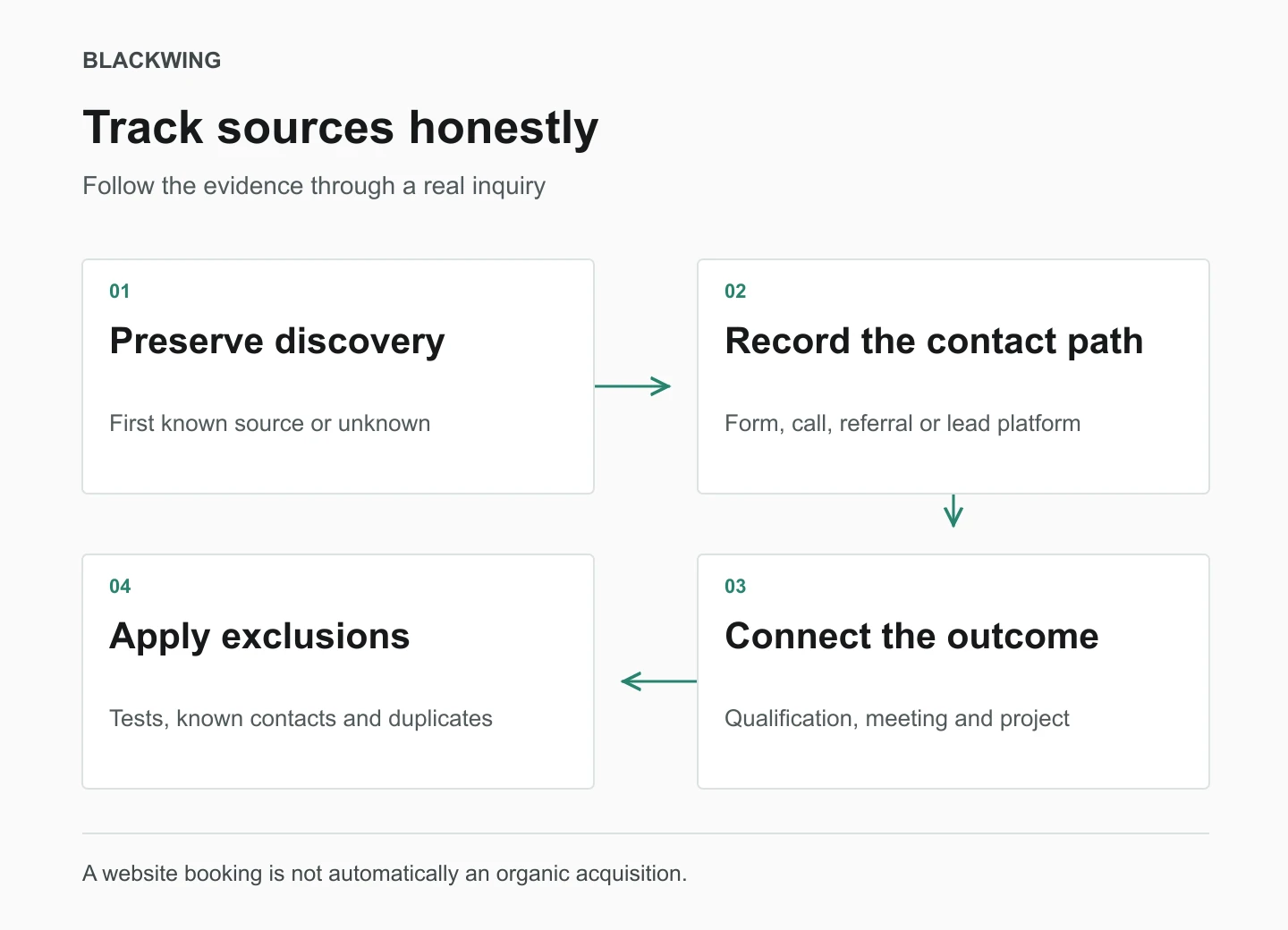
Use a small attribution record
| Field | What to preserve |
|---|---|
| Inquiry ID | A stable reference for the project inquiry |
| First known discovery | Evidence-backed source, or unknown |
| Contact path | Form, inbound call, lead platform, referral introduction or other route |
| Source evidence | Referrer, permitted campaign record, platform reference or customer statement |
| Confidence | Confirmed, self-reported, inferred or unknown, with your definitions |
| Outcome links | Qualification, appointment and opportunity references without duplicating the person |
Do not put unnecessary personal data into analytics events or campaign parameters. Keep customer details in the approved business systems. Use suitable permissions, retention rules and privacy choices for whatever tracking you implement.
Ask one neutral question when the evidence is incomplete
“How did you first hear about us?” can fill a useful gap if the customer chooses to answer. Keep that answer as self-reported evidence. It should not overwrite an existing campaign record or become more precise than the customer’s actual words.
If the customer says “online,” record online or ask a proportionate clarification. Do not translate it into Google organic because the company wants search to look successful. If the person is an existing client or known contact using a convenient booking link, classify that relationship separately from acquisition.
Connect source records to a real project
A person can make several inquiries over time. Link the source evidence to the relevant inquiry or opportunity as well as the contact where appropriate. Otherwise a repeat project may inherit the original source forever, even when a different campaign prompted the new work.
For paid lead platforms, preserve the platform’s reference and the actual charge in the relevant financial record. A disputed or duplicate inquiry should not disappear from spend history just because it is excluded from qualified-lead reporting.
The Thumbtack lead workflow and Yelp inquiry workflow cover those channel-specific handoffs. This guide owns cross-channel evidence and outcome definitions, not another list of lead sources to buy.
An illustrative attribution problem
A contractor receives a website booking from someone the owner already knows. The calendar records a successful appointment. The CRM import labels the source “website.” If the dashboard counts every website booking as a new organic prospect, it reports an acquisition that did not happen.
Keep the appointment, preserve the contact relationship and classify it outside the acquisition funnel. Do not delete the event to clean the report. Correct the reporting definition and retain the evidence that explains the exclusion.
Compare like-for-like inquiry cohorts
For each source, review unique inquiries, qualified projects, attended meetings and resolved wins and losses. State the inquiry period and reporting date. A source with a longer decision cycle should not be judged only by immediate wins while another source’s older projects are included.
Keep unresolved opportunities visible. When there are no won projects yet, acquisition cost per customer is unavailable, not zero. Show spend and the unresolved population rather than manufacturing a flattering efficiency result.
Start with the gaps that affect decisions
Review a small set of recent inquiries against the source records. Check duplicate matching, known-contact exclusions and whether the booking event can be joined to the correct inquiry. Do not spend a week designing an attribution model while the basic contact-to-project link is missing.
Use the construction sales dashboard to present the agreed measures. Blackwing’s workflow systems implementation work can connect the records and exception checks without claiming that attribution will ever be perfectly complete.
Questions contractors ask
How should contractors track lead sources?
Preserve the inquiry ID, first known discovery source, contact path, source evidence and confidence. Link the inquiry to qualification, meetings and opportunity outcomes. Keep unknown sources visible and distinguish customer acquisition from existing relationships, tests and duplicates.
Is a website booking an organic lead?
Not automatically. A booking may come from paid traffic, a referral, an existing client or a known contact. Organic acquisition requires reliable source evidence and a genuine acquisition inquiry, not merely a successful calendar event.
What if the CRM and website analytics show different sources?
Investigate the definitions and record relationships before choosing one. First discovery, latest visit and record creation may legitimately differ. Preserve the evidence, document the rule used for reporting and leave unresolved attribution unknown rather than relabeling it for a better result.