
Everyone has been communicating. Nobody is looking at the same commitment.
Managing subcontractors across projects means connecting each work package to a clear scope, ready-to-start conditions, confirmed commitments and a shared record of changes. A contact list and a group chat cannot carry all of that reliably.
For small and midsize contractors, the goal is a practical coordination system. It should make problems visible before the crew arrives, without requiring every subcontractor to adopt your entire software stack.
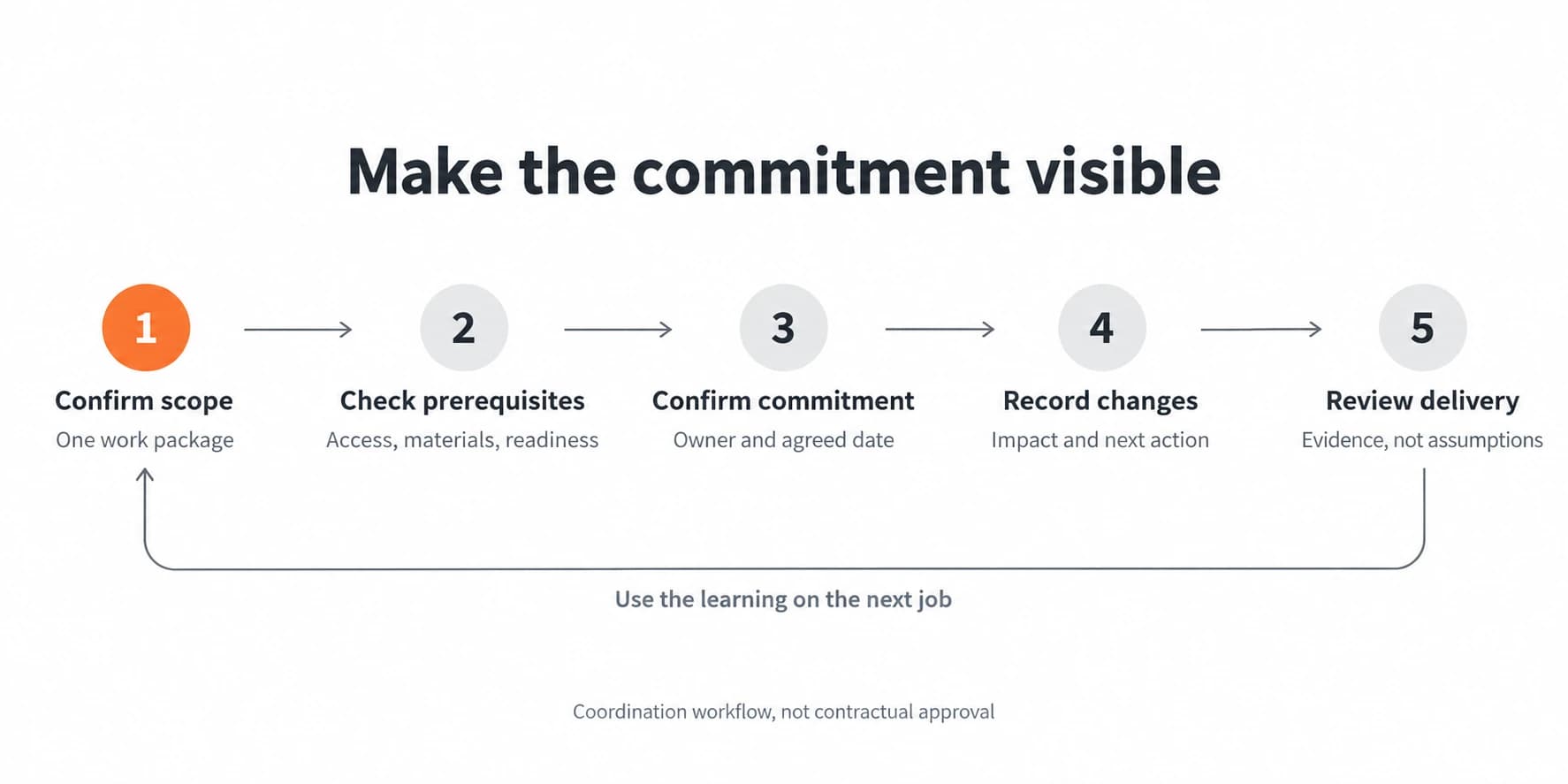
Separate the subcontractor from the work package
A subcontractor is a business relationship. The roofing package on Project A is a specific assignment. The same firm may perform different work on another project with different dates, conditions and responsibilities.
Keep one company record for reliable contact details, trade, authorized contacts and links to the relevant onboarding information. Then create a separate work-package record for each job.
This prevents a common mistake: changing the subcontractor's overall status to "delayed" when one package is waiting on materials supplied by somebody else.
Your subcontractor onboarding process establishes the relationship and required records. Ongoing coordination explains what that firm is expected to do on a particular project.
Make the package understandable before discussing dates
Record the current scope reference, project location, responsible manager and the person authorized to confirm changes. Identify interfaces with other trades, exclusions and unresolved decisions.
Do not rely on a task title such as "electrical works" to explain what is included. Link the applicable scope and document revision. When the scope is uncertain, say so instead of silently treating the uncertainty as the subcontractor's problem.
A useful package record includes:
- Project and work-package reference.
- Subcontractor company and designated contact.
- Scope, drawing or specification references.
- Proposed dates and separately confirmed commitments.
- Prerequisites, with an owner for each outstanding item.
- Current blocker or change and its effect on the plan.
- Latest update and next coordination action.
- Completion evidence required by the agreed process.
This is a coordination record. It does not replace the contract or give an administrator authority to approve technical work.
Check readiness before asking for a firm commitment
A date is not realistic merely because it fits your calendar.
Before confirming a start, check the prerequisites relevant to the package: access, preceding work, current documents, required materials and decisions. Use qualified project personnel to determine technical and safety readiness.
Assign an owner to every missing condition. "Waiting on site" is too vague. "Project manager to confirm access after the preceding trade finishes" explains what must happen.
For an illustrative finish package, the subcontractor may have capacity next week, but the approved finish selection is still missing. Record that dependency and a decision deadline. Do not announce a confirmed start until the appropriate people have actually confirmed it.
Readiness checks should reduce wasted coordination, not become paperwork added after a date has already failed.
Distinguish proposed, confirmed and changed dates
Keep proposed dates visible while you coordinate. Mark a commitment confirmed only when the authorized parties have agreed it and the necessary conditions are understood.
When the plan changes, preserve the previous commitment and record the reason, impact and new agreement. Otherwise, the calendar gradually rewrites history and nobody can explain why the customer received a different promise.
Changes in scope need the proper commercial and technical review. Connect them to your change-order workflow rather than hiding extra work inside a scheduling note.
Make sure the person speaking to the customer can see the current confirmed position. Customer updates should not depend on which project manager last called the trade.
Keep the communication burden reasonable
Subcontractors may work for several builders, each using different software. Demanding updates in five places is not a coordination strategy.
Choose a clear route for routine updates and one place inside your business where the official record is maintained. A designated coordinator can capture an authorized email or message into the package record without pretending the subcontractor logged into your system.
Ask for the information that affects the plan: readiness, confirmed timing, progress, blockers and decisions required. Set the frequency according to the package and current risk. Do not request daily reports for dormant work simply because the template has a daily column.
Keep urgent safety or technical issues within the appropriate escalation procedure. A project dashboard is not an emergency reporting channel.
Review performance using events you can explain
A fair subcontractor review considers confirmed commitments, observed delivery and the conditions around both.
Useful questions include whether updates arrived when agreed, whether confirmed dates were met, whether problems were raised in time to respond and whether completion evidence was supplied through the agreed process.
Record rework or quality issues with qualified assessment and a clear link to the package. Separate subcontractor-caused delays from access problems, missing design decisions or instructions issued by your own team.
Avoid a mysterious score out of ten. If a rating affects future allocation, payment decisions or the relationship, define the criteria and give the authorized team the underlying facts. A number without context can turn an internal mistake into a supplier's reputation problem.
Use the review to improve future planning. A firm that performs well on smaller packages may need different support on a complex job. One difficult project does not explain the whole relationship.
Coordinate capacity across the jobs you already have
Maintain a simple view of active packages by subcontractor and project. Show confirmed dates, proposed dates and unresolved dependencies differently.
Check clashes before making new promises. Ask the subcontractor about the capacity it is prepared to commit, rather than assuming a familiar firm is permanently available.
Connect this view to your broader crew and project scheduling, while respecting the subcontractor's contractual responsibilities and independent organization. Operational coordination should not invent authority over another company's workforce.
The first version can be a controlled register and a short weekly coordination meeting. Expand the system only when the complexity justifies it.
Build a record that helps both sides deliver
The practical test is whether your team and the subcontractor can identify the same scope, commitment and unresolved condition without reconstructing three conversations.
Blackwing helps construction businesses map those handoffs, assign ownership and implement coordination records that teams can maintain. If your projects depend on repeated calls to confirm what everyone already discussed, book an operations review.
FAQ
How should a small contractor manage subcontractors across projects?
Keep one subcontractor relationship record and a separate package record for each project. Track scope, prerequisites, confirmed dates, blockers, changes and next actions. Review capacity conflicts before making customer commitments.
What is the difference between onboarding and subcontractor management?
Onboarding establishes the relationship and required records. Ongoing management coordinates specific work packages, readiness, commitments, progress and changes. The two processes should connect without forcing every project update into onboarding paperwork.
What should a subcontractor performance review measure?
Use defined, evidenced criteria such as confirmed commitments, timely updates, issue escalation and agreed completion records. Include the causes and context of delays or rework. Qualified personnel should assess technical and safety matters.
Do subcontractors need access to the contractor's project software?
Not always. A clear update channel and an accountable internal record owner may be enough for a small operation. Give external system access only when it improves coordination and the permissions, contractual requirements and information boundaries are appropriate.